Personalised Gift Messages: What to Write and How to Say It
The best personalised gift message is short, specific and sounds like you. One real detail, such as a name, a shared memory or an in-joke, does more than a long poem. Below you will find wording for birthdays, anniversaries, weddings, Christmas, funny gifts and difficult moments, plus a simple method for writing your own. We make personalised message-in-a-bottle gifts, keepsakes and cards at Giftdelivery, so we know how much a few well-chosen words matter once they are printed or tucked inside a gift.
TL;DR
- Keep it to one to three lines. A single specific detail beats a paragraph of general warmth.
- Name something only the two of you share: a date, a place, a running joke, a nickname.
- Match the tone to the occasion. Humour suits birthdays and Christmas; sincerity suits anniversaries, weddings and sympathy.
- Draft the message on paper first, count the characters or lines the product allows, then write the final version.
- Read it aloud once. If it sounds like a greetings-card template, swap one phrase for something only you would say.
Table of Contents
- Why the words matter more than the gift
- A quick method for writing your own
- What to write for a birthday
- What to write for an anniversary
- What to write for a wedding
- What to write at Christmas
- Funny messages for any occasion
- Messages for sympathy, get well and tough times
- Making a message personal without making it long
- Fitting the words into the space
- Where the message lives: card, keepsake or bottle
- Put your message into a gift they can keep
- Common mistakes to avoid
- FAQ
- Sources
Why the words matter more than the gift
People rarely remember the exact object they were given five years ago. They do remember a line that made them feel seen. That is why a personalised gift works: the product carries the message, and the message proves you were thinking about one particular person.
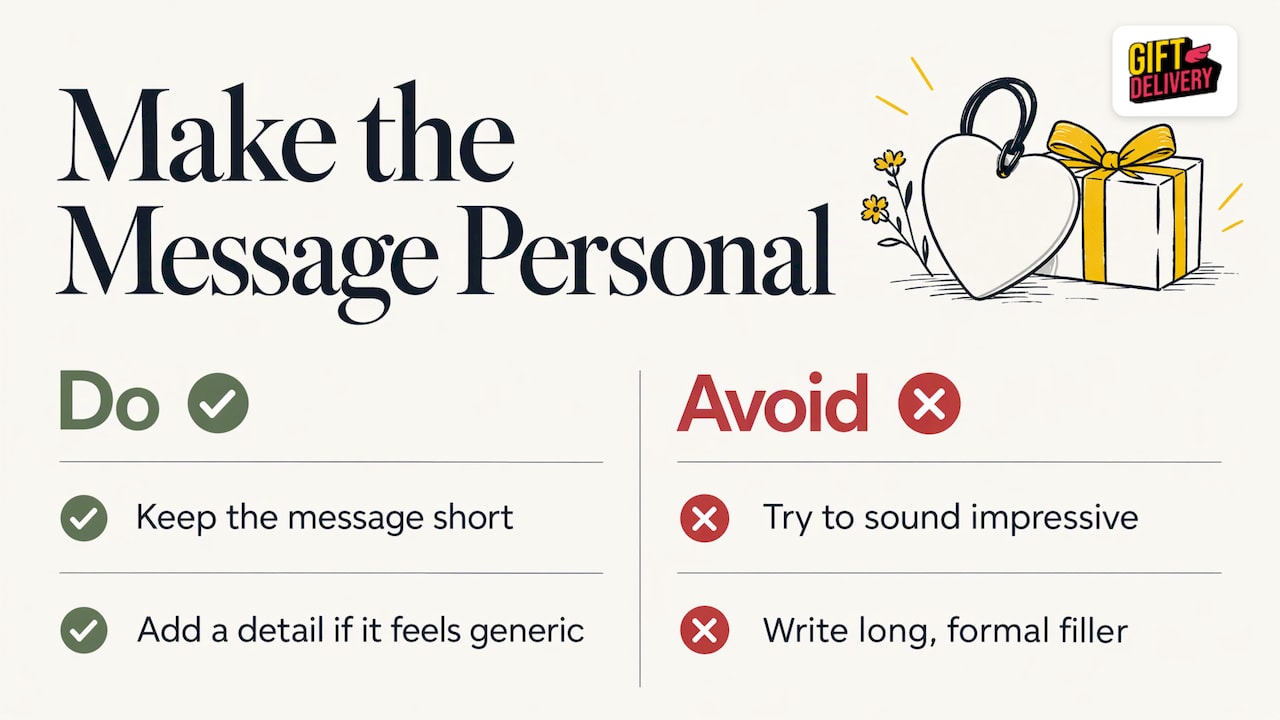
The trap is trying to sound impressive. Long, formal messages tend to read as filler, while short ones feel confident. A good test is whether the message could be swapped onto someone else’s gift without anyone noticing. If it could, add a detail until it could not.
A quick method for writing your own
You do not need to be a writer. Work through these four steps and you will have a message in about five minutes.
- Pick the feeling. Decide whether you want them to laugh, feel loved, feel proud or feel supported. One feeling per message.
- Find one detail. Think of a place, a date, a phrase they always say, a nickname or something that happened last year. Write it down even if it seems small.
- Write it plainly. Say the thing as you would say it out loud. “Thanks for always picking up the phone” is better than “Gratitude for your unwavering support.”
- Trim to fit. Cut anything that is not the feeling or the detail. Then check the space you have.
The same logic applies to the product you choose. A keepsake or a message in a bottle gives you room for a few lines; a mug or a jumper suits a short punchline. Choose the gift that matches the length of what you want to say, not the other way round. Our own piece on tips when personalising gifts goes into this from the product side.
What to write for a birthday
Birthdays are the easiest occasion to personalise because there is always a number, a name and a year behind them. Match the wording to your relationship.
For a partner
- “Happy birthday, [Name]. Every year with you is my favourite one so far.”
- “Another year older, still the person I want to tell everything to.”
For a friend
- “Happy birthday, [Name]. Thank you for being the friend who turns up with snacks and no questions.”
- “Here’s to another year of terrible ideas that turn into great stories.”
For a parent or grandparent
- “Happy birthday, Mum. Everything I know about looking after people, I learnt from you.”
- “Happy birthday, Grandad. Thank you for every Sunday afternoon.”
For a child
- “Happy 7th birthday, [Name]. You make our house louder and our lives better.”
Notice how each line has either a name, an age or a small behaviour in it. That is the personal touch doing its work. If you are choosing a card to go alongside the gift, our birthday cards and gifts page is a good place to start.
What to write for an anniversary
Anniversary messages can be romantic, funny or quietly sentimental. The strongest ones refer to time passing, because that is what the occasion is about.
- “Another year, and I would still choose you.”
- “Five years ago I had no idea what I was getting into. Best decision I ever made.”
- “Together always. Happy anniversary, [Name].”
- “From [place you met] to here. Thank you for every mile.”
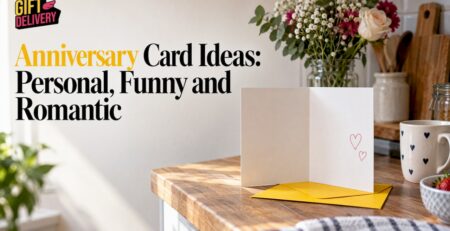
If you are both the type to roll your eyes at soppy cards, lean on the shared joke instead: “Still putting up with me. Happy anniversary.” For more wording to borrow, see our anniversary card ideas, which cover personal, funny and romantic options.
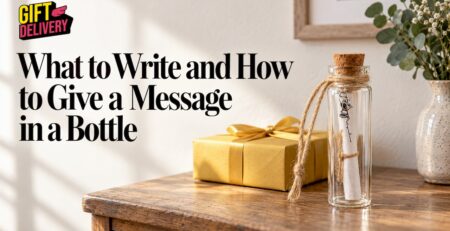
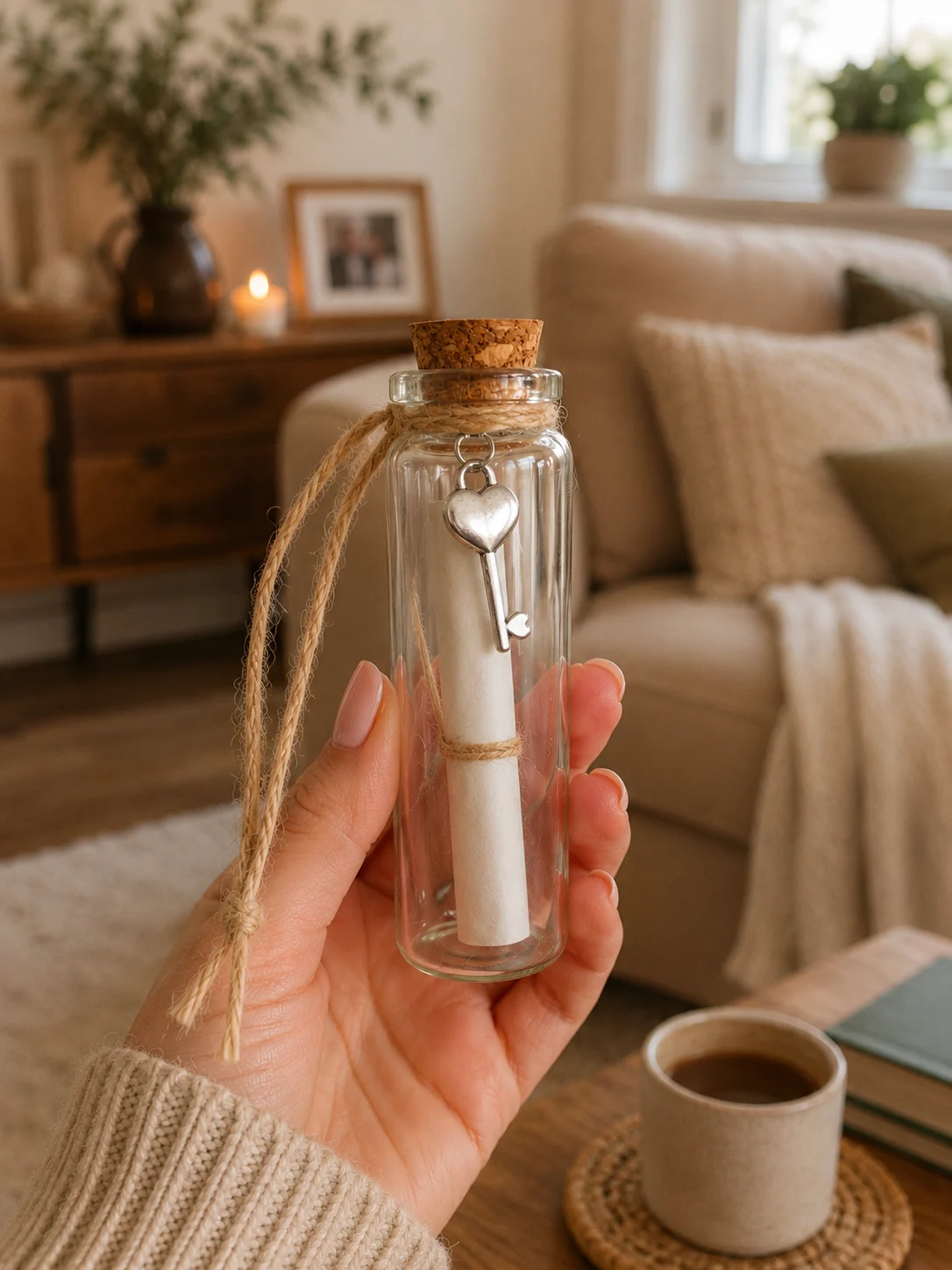
A date works well here. Putting the day you met or married on a keepsake turns the object into a small time capsule. A personalised message in a bottle with a heart key charm is one way to do it: the note inside is yours to write.
What to write for a wedding
A wedding gift message has to work for two people and often sits next to other messages from other guests, so it helps to be warm and brief.
- “Congratulations, [Name] and [Name]. Wishing you a lifetime of ordinary Tuesdays that feel like holidays.”
- “To the happy couple: may your home always be full of laughter and leftovers.”
- “So happy we got to share today with you. All our love.”
If you are close to the couple, add one memory: “We knew from the night you both argued about the playlist.” If you are a more distant guest, keep to a simple wish and the date. Both are fine. What does not work is trying to write a speech on a small gift tag.
What to write at Christmas
Christmas is the one time of year when you may be writing a dozen messages in a row, which is exactly when they start sounding identical. Vary the opening, not the length.
- “Happy Christmas, [Name]. Thank you for being my rock this year.”
- “Wishing you a Christmas full of good food, bad jokes and nobody asking about your plans for next year.”
- “To the one who always finds the last mince pie. Merry Christmas.”
- “Love from all of us. See you at the table.”
The handwriting advice is practical too: write the message before you write the name on the card, so that if you make a mistake you can start again without wasting the card. If you run out of room, continue inside the back cover rather than shrinking your writing; cramped text looks rushed. Our Christmas gifts range includes mugs, baubles and other pieces where a short name or message fits neatly.
Funny Christmas messages
Humour is the safest bet when you know the person’s sense of humour and the riskiest when you do not. A few lines that rarely misfire:
- “I got you something. It is not a lump of coal. You are welcome.”
- “Merry Christmas. This jumper was chosen with love and no regard for your dignity.”
- “You are on the nice list. I checked. Twice.”
If the gift itself is the joke, as with a novelty knit, let the message be a single line and let the design do the rest. Our funny Christmas jumpers are built around exactly that idea.
Funny messages for any occasion
Humour works best when it is affectionate rather than sharp. A useful rule: tease the habit, not the person.
- “Happy birthday. You are not old, you are vintage.”
- “Thank you for being the friend I can text at 2am about nothing.”
- “Sorry this is late. I was busy being thoughtful.”
- “Partners in crime. Happy anniversary.”
A shared in-joke is the strongest funny message of all, because nobody else will get it. If you are pairing the gift with a card, our guide to pairing a funny card with a thoughtful gift shows how to balance the laugh with a sincere touch.
Messages for sympathy, get well and tough times
This is the occasion where less is more. You are not trying to fix anything. You are trying to show up.
- “Thinking of you today and every day.”
- “No need to reply. I am just here.”
- “I am sending you a hug in the only way I can from here.”
- “I will always remember [Name] for [one specific thing]. Holding you close.”
Avoid phrases that explain the loss away or hurry the person towards feeling better. A plain, kind sentence, with a real memory if you have one, is enough. Our sympathy keepsake gift with a hug message and our guide to sympathy and thinking-of-you gifts are made for those moments.
Making a message personal without making it long
Personal does not mean long. These five ingredients let you make a short message feel individual:
| Ingredient | Example | Works best for |
|---|---|---|
| A name or nickname | “Congrats, Sam!” | Milestones, birthdays |
| A date | “14 June 2019, still the best day” | Anniversaries, weddings |
| A place | “Since that rainy week in Cornwall” | Couples, old friends |
| A shared phrase | “Partners in crime” | Friends, siblings |
| A habit or hobby | “Coffee first, then the world” | Colleagues, relatives |
Pick one, maybe two. Using all five at once makes the message feel crowded.
It also helps to write in the second person. “You always make me laugh” feels warmer than “I appreciate your sense of humour.” And be honest: if you are not a gushing person, do not write gushing words. The recipient knows your voice, and a message that sounds like you is the point of personalising anything.
Fitting the words into the space
Gift cards, tags and small keepsakes have limited room, and a message that overflows looks careless. A few habits help:
- Draft on scrap paper at the same size as the space, so you see how much fits.
- Aim for one to three lines on a card. If you run over, continue inside the back cover instead of shrinking your handwriting.
- Write the message first and the recipient’s name last, so one slip does not ruin the card.
- Use short words and break the message into lines rather than one long sentence.
If you are writing inside a small card that will sit next to a present, our partner-free practical rule is simply to leave a margin on every side. For more on presenting a small gift neatly, there is useful advice on fitting a message in a gift card when you wrap something small and flat.
If you are adding initials or a name to the gift itself, such as on clothing, take a look at these monogram ideas for personal gifts to see how placement and length affect the look. Initials and a short phrase are usually enough; save the longer words for the note.
Where the message lives: card, keepsake or bottle
The same words feel different depending on where they appear. It is worth choosing the format deliberately.
- A greeting card suits warm, conversational messages, and you can write as much as the card allows.
- A keepsake suits a short, lasting line the person can keep on a shelf. Think of it as the one sentence you want them to remember.
- A message in a bottle suits a slightly longer note, because the recipient unrolls it and reads it as a small moment of discovery.
- A mug or jumper suits a punchline or a name, nothing more.
Thinking about the container before you write stops you from squeezing a heartfelt paragraph onto a mug or wasting a roomy note on three words.
Put your message into a gift they can keep
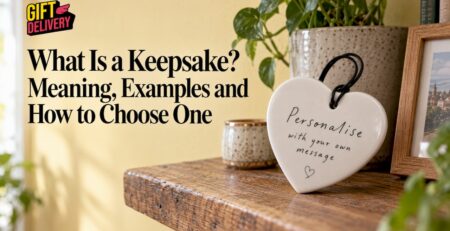
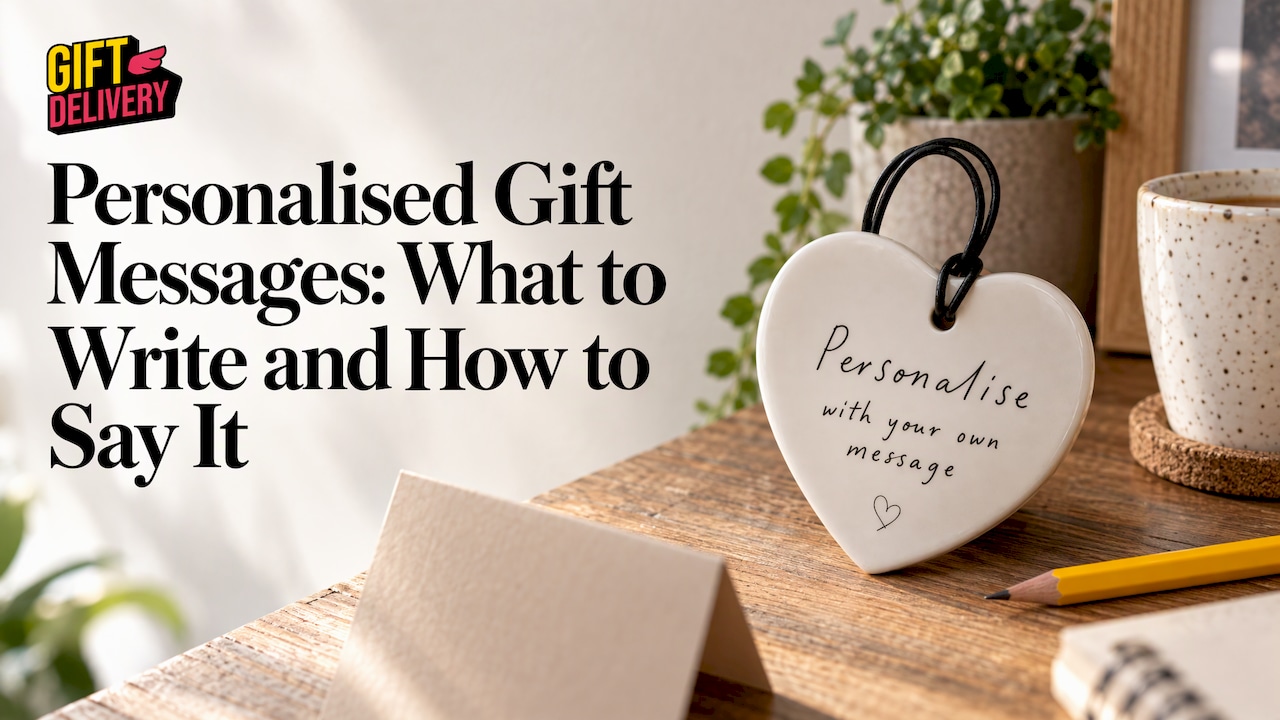
If you would rather the words arrive ready to open, our personalised keepsake heart with your own message lets you add your own words. Our message in a bottle collection works in a similar way, with designs for anniversaries, Valentine’s Day, birthdays or simply saying hello, and our personalised message in a bottle with a rose charm is another way to deliver a handwritten-feeling note. You can add names or messages to many of our designs, so the finished gift says exactly what you wrote.
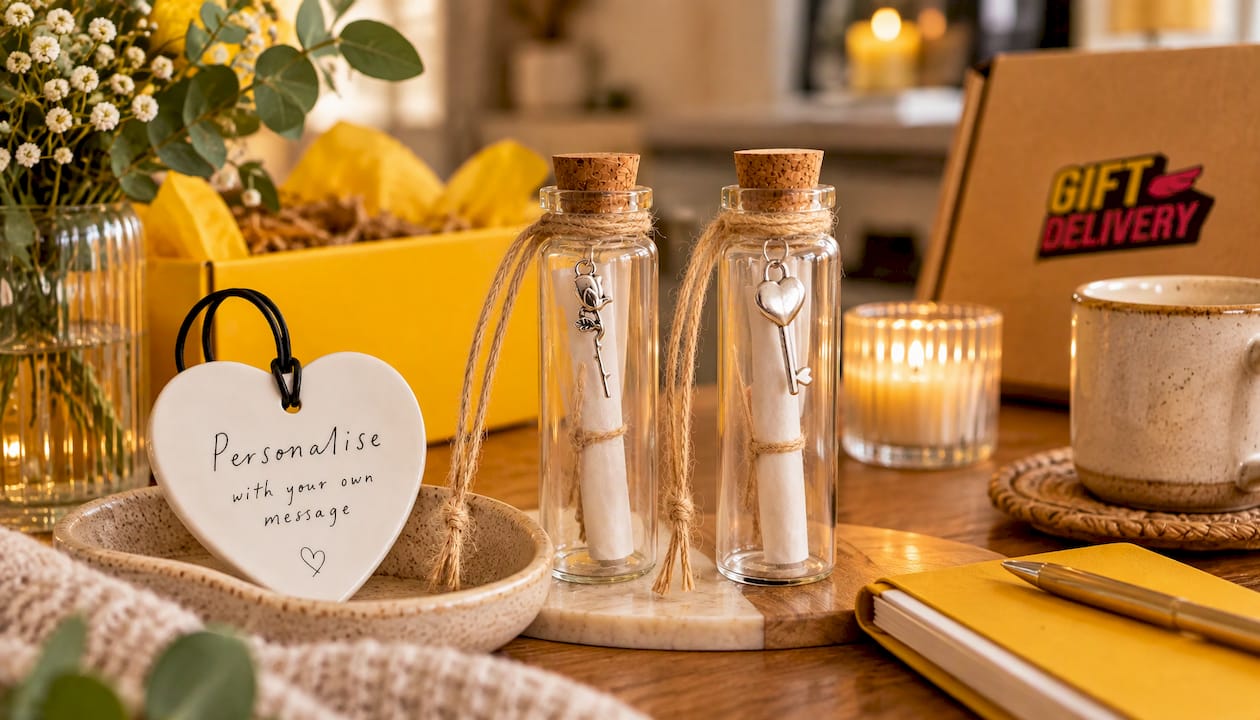
For smaller gestures, browse our greeting cards, keepsakes and letterbox gifts, each a way to pair a short personal message with something the recipient can hold.
Common mistakes to avoid
- Copying a template word for word. Use it as a starting point and change at least one phrase to something you would actually say.
- Being too vague. “Hope you have a great day” could go to anyone. Add the name, the number or the reason.
- Writing for the wrong audience. A joke about age lands differently with a close friend than with an elderly relative. Know who will read it.
- Overloading it. Three ideas in one message dilute all of them.
- Leaving it to the last minute. Give yourself time to write, sleep on it and trim. The second draft is nearly always better.
FAQ
What should I write on a personalised gift?
Keep it to one to three lines and include one real detail: a name, a date, a shared memory or an in-joke. Say what you would say face to face. Something like “Happy birthday, Sam. Thank you for every terrible idea that turned into a good story” does the job.
How long should a personalised gift message be?
Short is better. One to three lines suits most cards, and a keepsake may only need one sentence. If you have more to say, a card or a note inside a message in a bottle gives you more room than a mug or a jumper.
What are some good funny gift messages?
Affectionate teasing works best: “Not old, just vintage” for a birthday, or “You are on the nice list. I checked” at Christmas. Tease a habit rather than the person, and only use humour if you know how the recipient will take it.
What do I write when giving someone a gift in difficult times?
Keep it simple and kind. “Thinking of you today” or “I am here, no need to reply” is enough. Avoid trying to explain the situation or cheer the person up too quickly, and add a real memory if you have one.
Can I add a name or date to the message?
Yes, and it is one of the easiest ways to make a message feel personal. A name, a nickname or the date of a special day turns a general sentence into one that belongs to a single person.